
"Fancy knowing nothing about yourself like that."
In a 1910 letter written from the Red Sea, a young Chicago woman relays a story she'd just heard. A shipwreck. A baby no one could identify. And a girl her own age who grew up not knowing who she was.

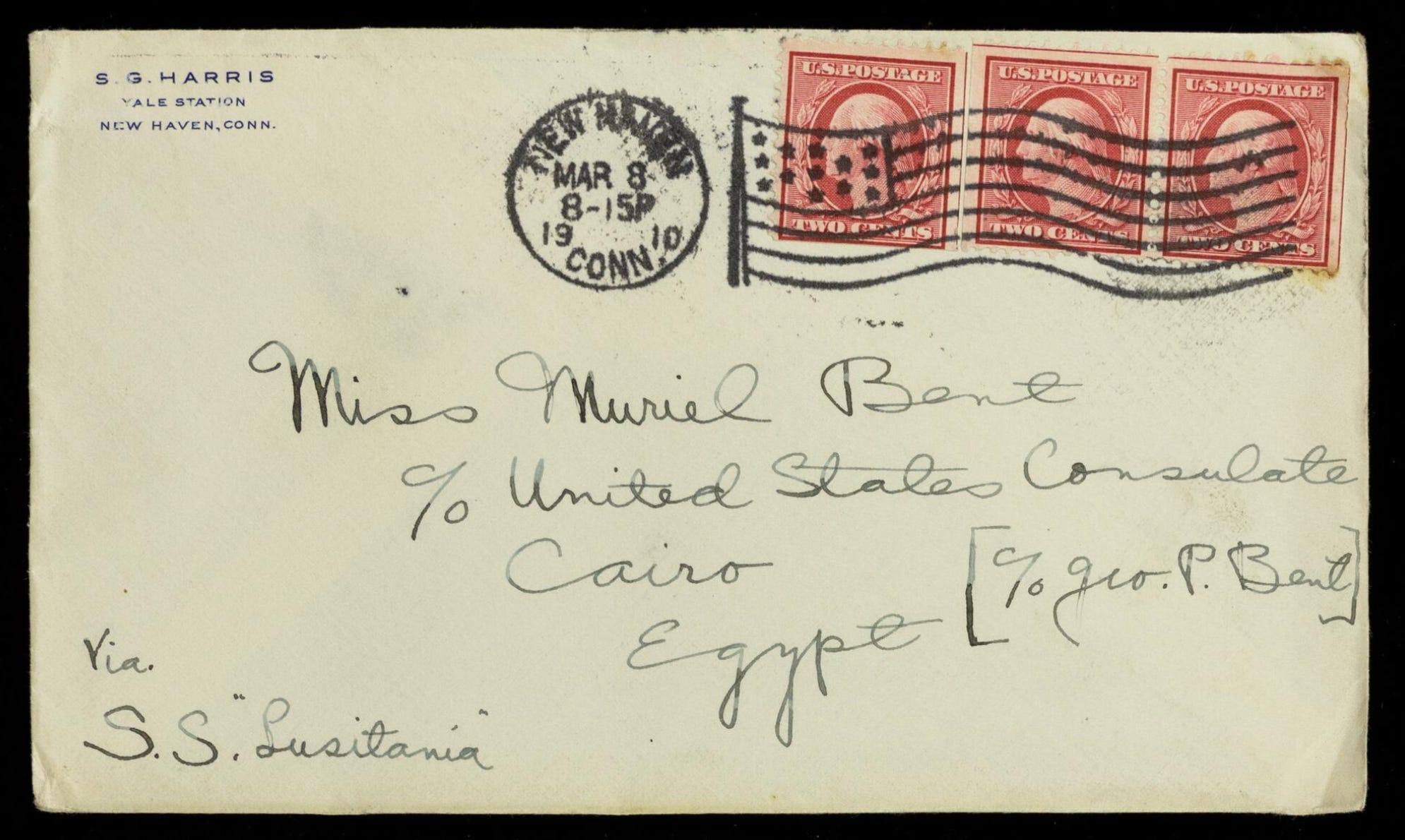
A Shipwreck Story, Hidden in a Love Letter
What can you find in a century-old love letter? The usual things: longing, gossip, travel plans, family news. And, sometimes, a shipwreck mystery.
In April 1910, Muriel Bent was writing to Stanley Gale Harris from a ship in the Red Sea. She had so much to tell him that she split the letter into several envelopes, numbered in the corners so he’d know which to read first. Muriel told Stanley about the heat, her reading, her costume for that evening’s shipboard fancy-dress party — “improvised and mostly perishable” — and how happy she was to be getting closer to him.
Then, almost in passing, she shared a story she’d heard from another passenger:
In a shipwreck near the Aroe Islands off Northern Australia, nearly everyone was drowned. The Captain and pilot escaped in a boat, and thirty hours later picked up two young girls who had been floating all that time. One of the girls had found and saved a baby that drifted near her. They were all taken to Thursday Island where every effort was made to identify the child. But none was entered on the passenger list of the steamer and nothing about her was found. She was adopted by the wife of the head of one of the big companies, and brought up as their daughter. She is about my age now, and went to school with Mr. Williams’ older daughter.
Fancy knowing nothing about yourself like that.
— View letter
The story Muriel heard was almost certainly a retelling of the wreck of the RMS Quetta, which sank in the Torres Strait near Thursday Island in 1890. Contemporary reports preserve the same haunting central detail: among the few women and children who survived was a baby girl whose identity was uncertain. She was adopted and raised in Queensland, becoming known as Cecil “Quetta” Brown.
Muriel’s version gets the geography a little wrong — the Aru, or Aroe, Islands are northwest of Australia, while the Quetta sank near Thursday Island — but that only makes the letter more revealing. This is how stories traveled: by ship, by rumor, by memory, and eventually by mail. A disaster from 1890 could still be circulating twenty years later, transformed into a shipboard anecdote and tucked into a love letter.
We just added 1,200 pages from the Harris-MacLean family papers to Newberry Transcribe — including the letters between Muriel and Stanley, written during their courtship and early married life. Volunteers have now worked through more than 95,000 pages of handwritten material across all our collections, making them searchable and available to researchers, teachers, family historians, and anyone who’s ever wanted to eavesdrop on the past.
Start transcribing: nt.newberry.org
I’ve done a few transcriptions myself, and plan to do more. Really interesting & sometimes challenging, but being part of this is exciting. I’ll have to check out the new additions!